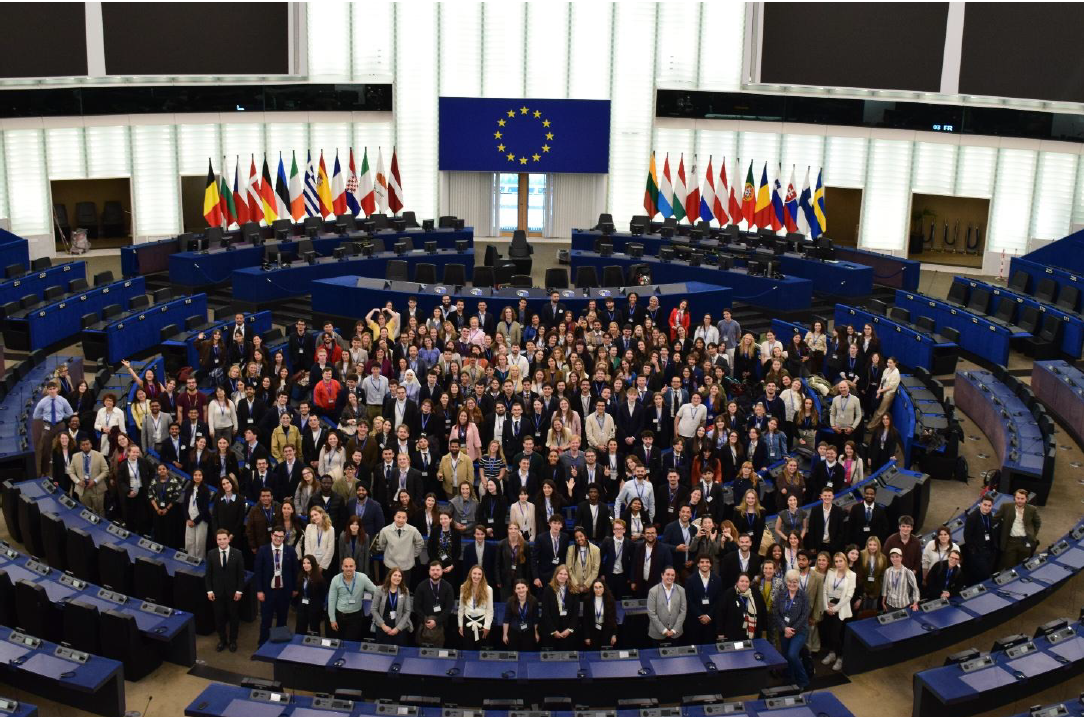
From 20 to 22 April 2026, the European Parliament in Strasbourg hosted the fifth edition of the European Student Assembly (ESA 2026). The Assembly was organised by the Technical University of Cluj-Napoca (EUt+ Alliance) and NHL Stenden University of Applied Sciences (RUN-EU Alliance) within EUC Voices, an Erasmus+ Cooperation Partnerships project coordinated by Université Grenoble Alpes (Unite! Alliance), together with the University of Turin (UNITA Alliance), Warsaw School of Economics (CIVICA Alliance), Julius-Maximilians-Universität Würzburg (CHARM-EU Alliance), and the Erasmus Students’ Network.
This year’s edition brought together 250 participants selected from over 3,000 applicants, representing 196 universities across 54 European University Alliances in 34 countries.
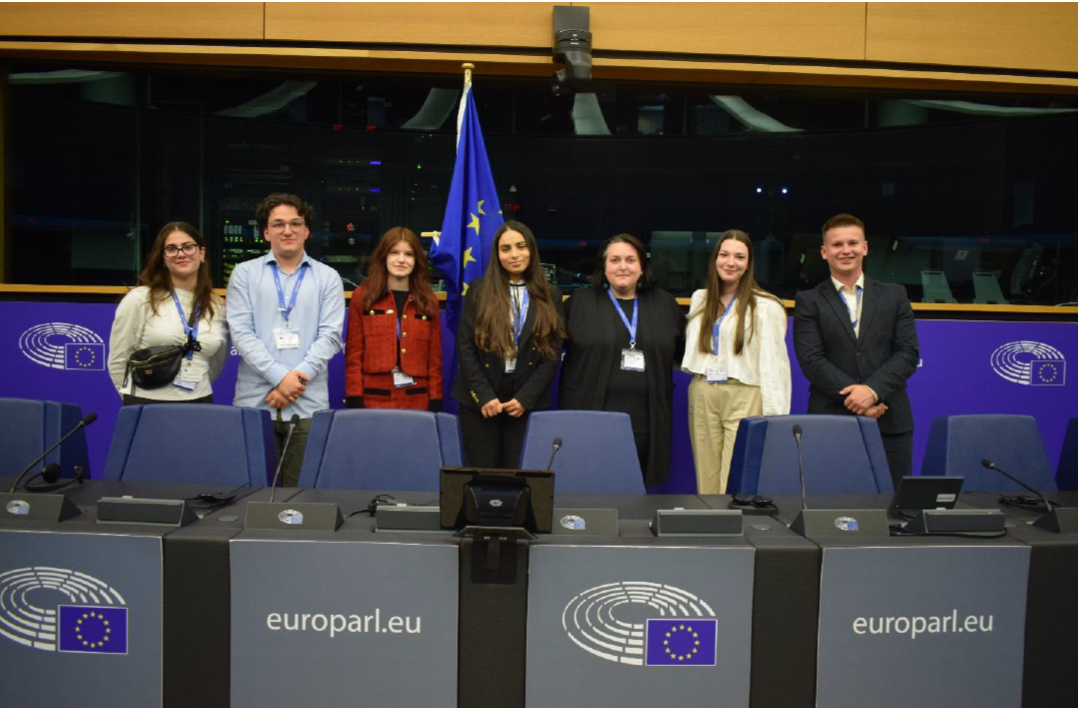
The EUt+ Alliance was among the participating alliances, represented by seven students from six of its member institutions. The group brought together diverse academic backgrounds, including Computer Engineering and Informatics, International Business, Management Engineering, Civil, Industrial and Agricultural Engineering, Computer Science, Cybersecurity, and Applied Geophysics. This multidisciplinary profile reflects the breadth of the Alliance and ensured the integration of technical perspectives across infrastructure, digital, and environmental domains within the Assembly’s work.
jjj
This diversity of expertise aligns directly with the eight thematic panels of ESA 2026, which addressed topics such as the circular economy, digital resilience, inclusive transport, democratic participation, strategic autonomy, and demographic change. These themes reflect the regulatory and policy environment in which EUt+ graduates will operate. Engineers, computer scientists, and technical specialists are increasingly required not only to develop solutions, but also to understand the policy frameworks that shape their feasibility and implementation. In this context, the participation of EUt+ students in the deliberative process is essential, reflecting the Alliance’s commitment to integrating technical expertise into European policy discussions.
ESA 2026 was the result of a one-year process jointly designed and implemented by the coordinating partners, structured through successive stages including brainstorming sessions, thematic definition, the call for applications, student selection, and coordination of working groups. The process also involved European university alliances and alumni networks in management, coordination, and logistical support.
The project was organised in two complementary phases: online and onsite. During the online phase, selected students worked for four months on defined topics, participating in expert sessions, analysing the EU legal and policy framework, and co-developing policy proposals. The onsite phase represented the final stage, where outcomes were presented, debated, and voted on in plenary sessions at the European Parliament.
The onsite component was structured along three complementary strands: students as the core operational group responsible for developing and voting on recommendations; European university alliances, which strengthened the transnational academic dimension; and the alumni network, which ensured operational continuity, coordination, and logistical support.
EUt+ was engaged not only through its students, but also through academic staff contributing to the strategic coordination of ESA 2026. Raluca Istoan and Roxana Tămaș (UTCN) played key coordination roles, working with EUC Voices leadership on the academic and organisational design and implementation of the initiative.