

- Home
EUt+ at the heart of debate on the future of European University Alliances
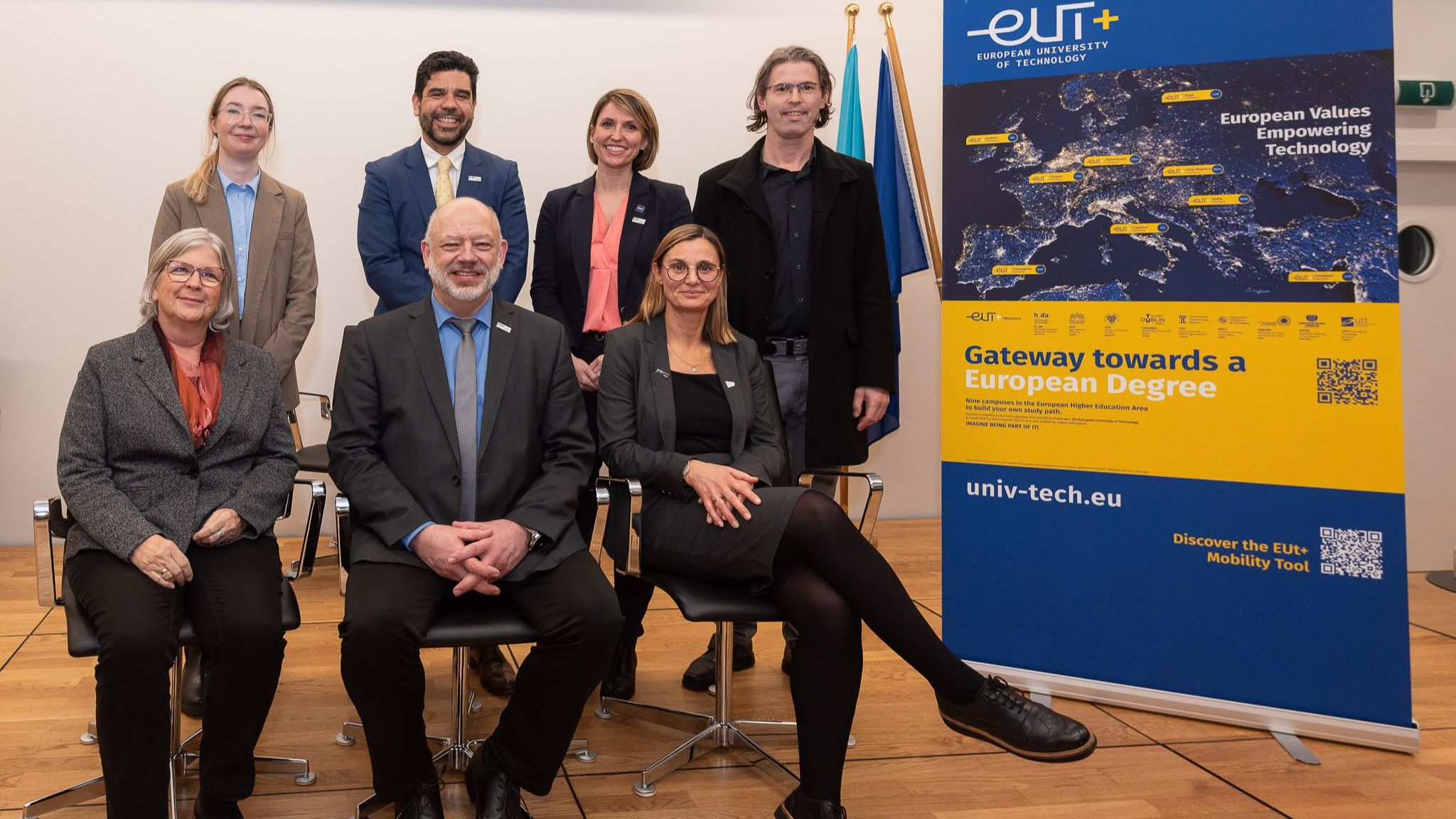
on the January 14, 2026
Brussels, January 2026 – European University Alliances are no longer a pilot initiative: they are becoming a structural pillar of the European Higher Education Area. This message stood at the core of the international conference on the future of European higher education alliances, organised in Brussels by the State of Hesse and Darmstadt University of Applied Sciences (h_da), a member of the EUt+ alliance, which brought together European institutions, policymakers and higher education leaders to shape the future of European universities.
From cooperation to integration: the EUt+ model
The discussions highlighted a shared vision: European University Alliances must move beyond project-based cooperation and evolve into sustainable, structured forms of European academic integration. For EUt+, this ambition is already taking shape through tangible developments such as the EUt+ common affiliation, which strengthens a shared European academic identity, the EUt+ Mobility Map, which enables students and staff to navigate opportunities across partner universities, and the progressive alignment of teaching, research and administrative structures. Together, these initiatives illustrate how EUt+ is not only cooperating across borders, but actively building the foundations of a future European university model.
Strong political support for European alliances
High-level political and institutional representatives expressed clear support for the continuation and reinforcement of European University Alliances beyond 2027. The European Commission underlined the success of the initiative so far, noting that alliances have exceeded expectations and are delivering concrete results in European higher education transformation.
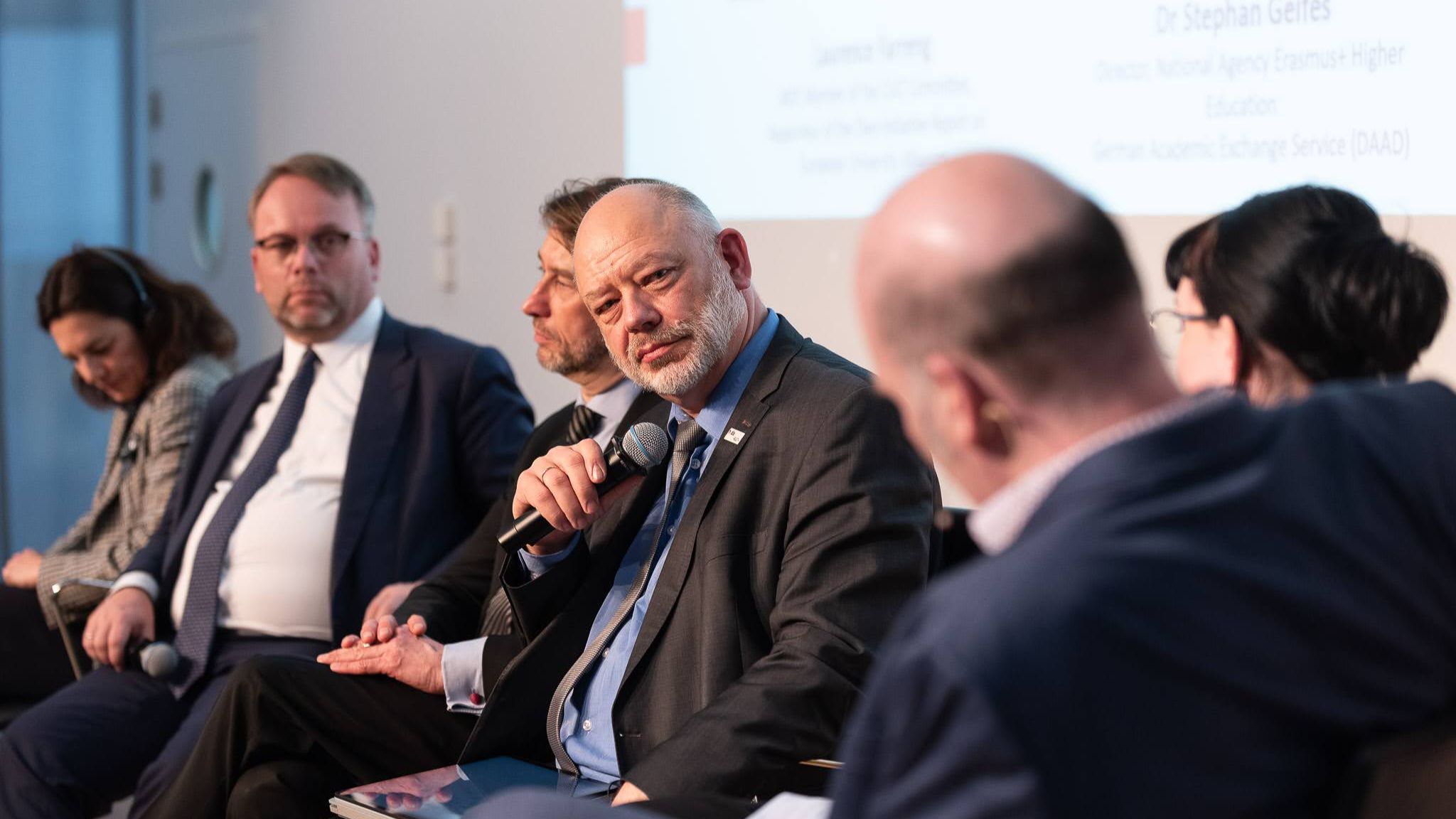
Participants to the discussion, which includes among others Prof. Dr. Arnd Steinmetz, President of h_da, Timon Gremmels, Minister of Science (State of Hesse, Germany), Laurence Farreng, MEP and member of the CULT Committee, Vanessa Debiais-Sainton, Member of the European Commission, emphasised the importance of long-term financial stability, clear anchoring of alliances within Erasmus+, the reduction of regulatory and administrative barriers, and the creation of stable governance frameworks for European-level structures. These elements were identified as essential conditions for alliances to unlock their full impact and deliver long-term transformation.
EUt+: building a European university
Within this broader European dynamic, EUt+ stands out for its long-term ambition: not only to cooperate, but to grow into a fully-fledged European university, including the development of shared structures and a potential common legal framework.
This vision reflects EUt+’s commitment to enabling students to study seamlessly across multiple European campuses, creating integrated European learning pathways, strengthening cross-border research ecosystems, and building administrative and governance models adapted to European-scale cooperation. EUt+ embodies a model of higher education that is European by design, rooted in shared values of innovation, academic freedom, democracy and societal responsibility.
Shaping the future of European higher education
This conference confirmed a strong convergence of visions: European University Alliances are not temporary projects, but strategic instruments for Europe’s future. For EUt+, this moment represents both recognition and responsibility. Recognition of the progress already achieved, and responsibility to continue building concrete, sustainable structures that transform cooperation into integration. By strengthening its alliance-based model, EUt+ contributes to a European higher education system capable of addressing global challenges, strengthening Europe’s competitiveness, and forming a new generation of truly European graduates.
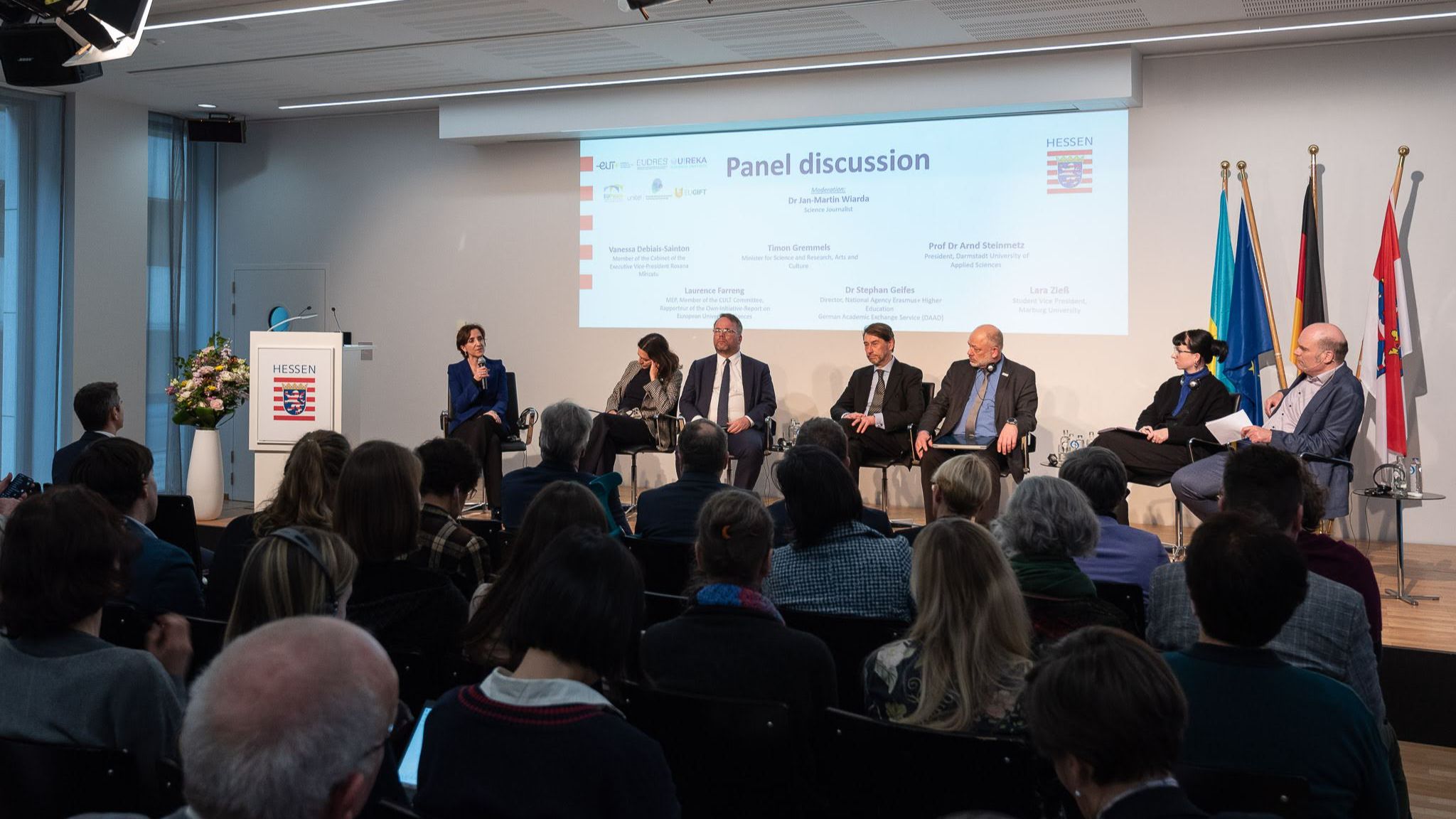
Photo credits: Representation of the State of Hessen / Eric Berghen
More information at: https://impact.h-da.de/en/a-boost-for-european-university-alliances