

- Home
EUt+ Cassino-Gaeta Week: Strenghtening the foundations of the European University of Technology
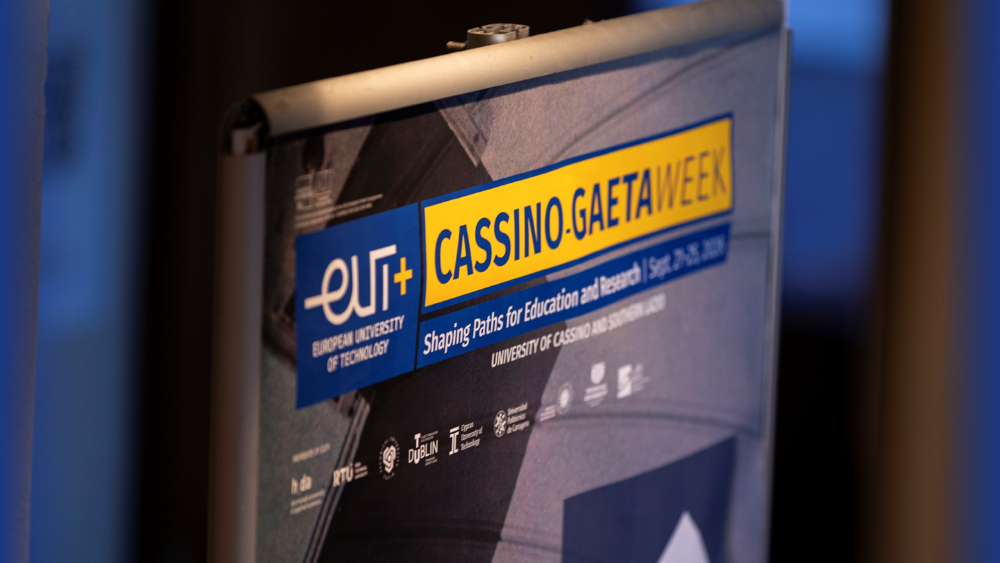
from September 21, 2026 to September 25, 2026
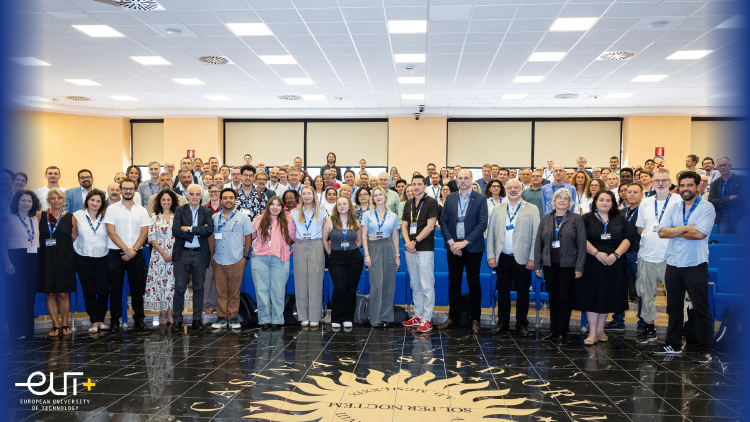
From 21 to 25 September, colleagues from all EUt+ member universities gathered for a week of intensive collaboration hosted by Università degli Studi di Cassino e del Lazio Meridionale.
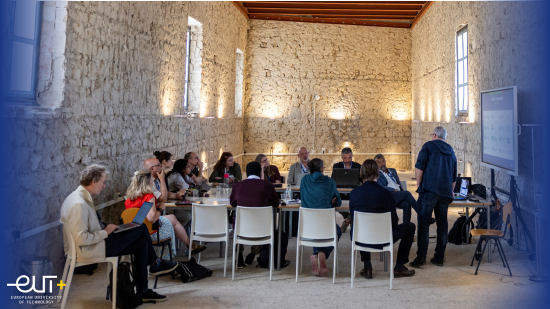
From the university campus in Cassino to the historic setting of Gaeta Castle overlooking the Mediterranean, 11 working groups came together to advance the work of the alliance and strengthen the foundations for deeper cooperation across our universities.
Opening the EUt+ Week in Cassino
For five days, teams worked on how to:
- Further align our curricula, from learning outcomes to mobility opportunities across the alliance;
- Transform the way research is structured within our universities and across Europe, creating stronger connections and greater impact;
- Measure the progress of EUt+ more systematically across our institutions;
- Further develop data convergence and shared digital services across the alliance.
The week opened with an opening session, with welcoming words from the rector of UNICAS, Marco Dell'Isola, and a seminar exploring AI for the European student, chaired by Prof. Sergio Nisticò, Vice-Rector for Internationalisationat UNICAS.
The seminar brought together perspectives from academia, technology transfer and the digital sector. Prof. Luigi Ferrigno, Vice-Rector for Third Mission and Rector's Delegate for Technology Transfer, Spin-Off and Start-Up, joined Prof. Francesco Iacoviello, Vice-Rector for Information Technology Services, Digital Transition, Technological Innovation and Digital Communication; Marco Aveta, AI-First Solutions Developer and founder of Cosmic Brokkoli; and Marco Iacobelli, Founder of The Innovation Group and Humans.tech.
From there, the different working groups continued their work, each contributing to the development of structures and processes that are gradually making cooperation between EUt+ universities more concrete.
Building European research communities
Transforming research structures within our universities and across the alliance was an important part of the week, as four EUt+ European Research Groups continued to take shape.
The ERGs, focusing on cybersecurity, robotics, sustainability, business, economics and technology, are developing new ways of organising research collaboration across the alliance. They connect researchers from different universities, environments and disciplines around shared challenges, while creating new connections with European actors and external stakeholders.
By bringing together expertise across institutions and disciplines, the groups are opening new opportunities for researchers to collaborate, develop their expertise and engage with wider European research communities.
The week also marked an important milestone for EUt+ research: the alliance reached 500 publications using the EUt+ Common European Affiliation. This milestone reflects the growing visibility of the alliance's research community and the increasing number of researchers contributing to a shared European research identity.
Alongside the European Research Groups, the EUt+ Research Committee came together to further discuss the development and institutional support of research structures within the European University Alliance, and how these structures can contribute to the future of research collaboration across EUt+.
Bringing education closer together
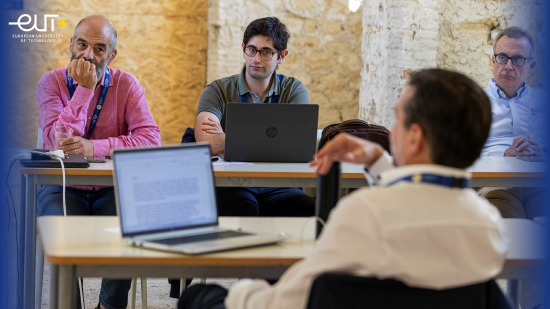
Four EUt+ curriculum clusters (Business and Economics, Civil Engineering, Computer Science, and Industrial Engineering) each brought together academics involved in designing and developing programmes from our member universities.
The teams continued the work of aligning learning outcomes across programmes and universities, updating mobility maps and developing tools that can make mobility between EUt+ universities an increasingly seamless experience for students.
This ongoing alignment is part of a broader effort to connect the educational offer across the alliance, allowing students to navigate opportunities across institutions while maintaining clear academic pathways. It also contributes to the longer-term development of the European Plurinational Degree in Engineering.
Developing the digital foundations
Work on Common Digital Services and Data Convergence also continued during the week. Developing shared digital foundations is essential to enabling cooperation at the scale of a European University Alliance. Connecting institutions, people, data and services requires common approaches and tools that can support the different strands of work taking place across EUt+.
Closing the week in Gaeta
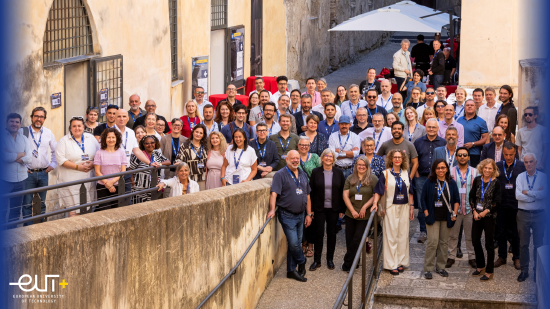
The EUt+ Week in Gaeta was another step in a longer process: strengthening the aligned foundations, collaborations and structures that allow nine universities to work together as a European university alliance.
Across research, education, digital development and institutional cooperation, the work is increasingly focused on connecting what already exists across our universities and developing new structures that can support deeper collaboration at European level.
The work continues, with the next EUt+ Week set to take place in Plovdiv, Bulgaria, in October 2026!