

- Home
Exploring Doughnut Economics in EUt+: Engaging students
Published on February 10, 2026
–
Updated on February 10, 2026
Dates
on the December 4, 2025
As part of Riga Week, the EUt+ Sustainability Office organized a workshop on Doughnut Economics, bringing together representatives from all member universities of the alliance, including members of the Student Board. The event aimed to explore new approaches to sustainable development and the integration of social and environmental dimensions into universities’ strategic planning.
The EUt+ Sustainability Office fosters sustainability collaboration across the alliance, serving as a central hub to coordinate strategies and actions. It supports the integration of environmental, social, and governance (ESG) policies in line with the UN Sustainable Development Goals.
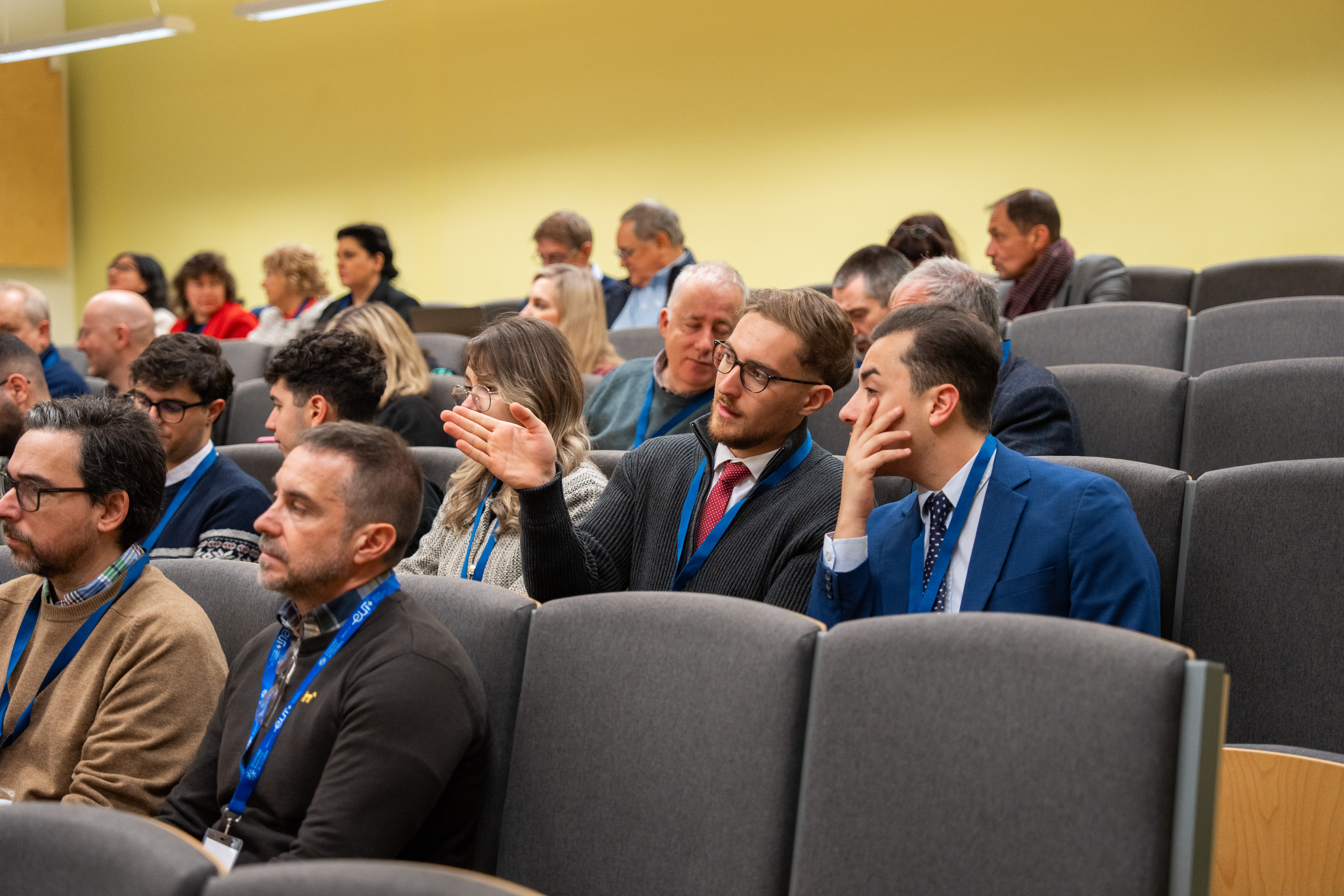
The workshop featured an interactive game-based session, which was very well received. Students were divided into several teams, each including students, faculty members, and experts from the Sustainability Office, who supported discussions and guided teams in decision-making. During the activities, participants analyzed different sustainable development scenarios, set targets for social and environmental indicators, and discussed strategic decisions that universities could adopt. The games encouraged creativity, collaboration, and engagement with the Doughnut Economics concept.
Discussions focused on defining the boundaries and scope of the analysis, as well as identifying key stakeholders. The workshop materials, including the Kit DONUT framework, will serve as a basis for further analysis and data collection to support the implementation of the Doughnut approach within universities.
Applied to the EUt+ context, the Donut framework enabled collective reflection on:
The workshop also highlighted the role engineers are expected to assume today, particularly their responsibility to make informed decisions in light of socio-ecological challenges such as finite resources, environmental and social impacts, and the absence of technological neutrality.
The involvement of the Student Board was highlighted as particularly important. Beyond becoming familiar with the Doughnut Economics framework, student representatives actively contributed feedback on how the approach could be applied within EUt+, including its potential integration into curricula, student initiatives, and university governance. The workshop also provided an opportunity to introduce the EUt+ Sustainability Office to the Student Board, strengthening dialogue and cooperation between students and institutional actors on sustainability-related matters.
EUt+ Sustainability Office plans to expand the application of Doughnut Economics, integrating the concept into sustainability strategies and resource management. The model provides universities with a tool to assess their environmental and social impact, foster innovation, and develop ambitious yet realistic policies.
This workshop represents an important step towards sustainable development at EUt+, combining academic knowledge, innovation, and active student participation, with the goal of enabling universities to become drivers of sustainable change at local and global levels.
Interactive and game-based activities
The workshop featured an interactive game-based session, which was very well received. Students were divided into several teams, each including students, faculty members, and experts from the Sustainability Office, who supported discussions and guided teams in decision-making. During the activities, participants analyzed different sustainable development scenarios, set targets for social and environmental indicators, and discussed strategic decisions that universities could adopt. The games encouraged creativity, collaboration, and engagement with the Doughnut Economics concept.
Identifying priorities
Discussions focused on defining the boundaries and scope of the analysis, as well as identifying key stakeholders. The workshop materials, including the Kit DONUT framework, will serve as a basis for further analysis and data collection to support the implementation of the Doughnut approach within universities.
Applied to the EUt+ context, the Donut framework enabled collective reflection on:
- defining the scope of analysis specific to EUt+;
- assessing the relevance of different boundaries in relation to the alliance’s activities.
The workshop also highlighted the role engineers are expected to assume today, particularly their responsibility to make informed decisions in light of socio-ecological challenges such as finite resources, environmental and social impacts, and the absence of technological neutrality.
The involvement of the Student Board was highlighted as particularly important. Beyond becoming familiar with the Doughnut Economics framework, student representatives actively contributed feedback on how the approach could be applied within EUt+, including its potential integration into curricula, student initiatives, and university governance. The workshop also provided an opportunity to introduce the EUt+ Sustainability Office to the Student Board, strengthening dialogue and cooperation between students and institutional actors on sustainability-related matters.
EUt+ Sustainability Office plans to expand the application of Doughnut Economics, integrating the concept into sustainability strategies and resource management. The model provides universities with a tool to assess their environmental and social impact, foster innovation, and develop ambitious yet realistic policies.
This workshop represents an important step towards sustainable development at EUt+, combining academic knowledge, innovation, and active student participation, with the goal of enabling universities to become drivers of sustainable change at local and global levels.
Date of update 10 February 2026