

- Home
Cartagena Week - What does a week of intensive collaboration look like in EUt+
Published on April 28, 2026
–
Updated on April 28, 2026
Dates
from April 20, 2026 to April 24, 2026
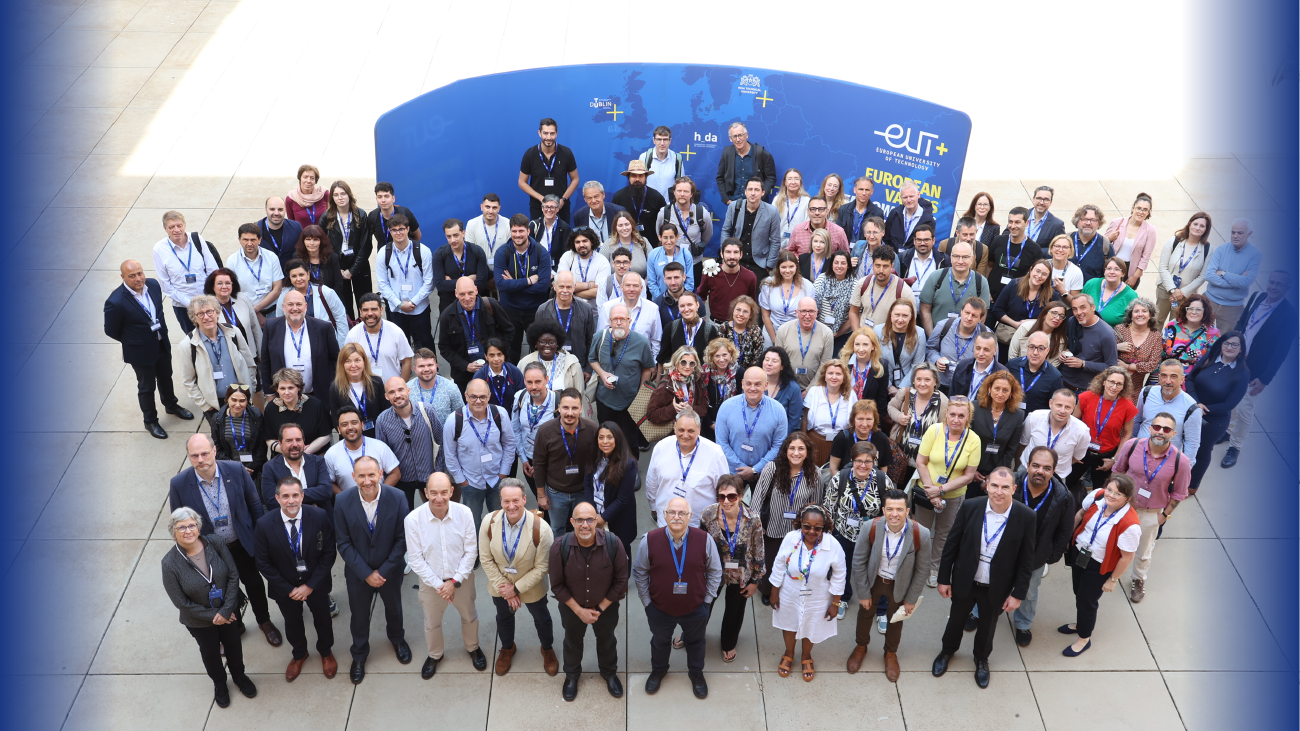
From 20 to 24 April, colleagues from the nine universities of EUt+ gathered at Universidad Politécnica de Cartagena (UPCT) for the Cartagena Week.
For five days, teams that usually work online could sit in the same room to move forward on the practical questions of building a shared European university:
Five of EUT+ clusters (Environmental Engineering, Food Science and Technology, Media, Microelectronics, and Telecommunications) each brought together the academics who design and teach the joint programmes. During the week, teams updated their mobility maps on the EUt+ Mobility Map, finalised learning outcomes, discussed common promotional toolkit and planned the next summer schools and activities, some focusing on the Internet of Things for example.
In parallel, the Human Resources office worked on how we recognise staff who contribute to the alliance, not only academics, but administrative and technical colleagues whose work crosses institutional borders. The Quality Assurance and Accreditation teams advanced the framework that allows national agencies to trust EUt+ degrees, an essential step before we can issue genuinely European diplomas.
A seminar on citizen science opened the week, and the EUt+ Research Office ran a training session on moving from Erasmus+ funding to Horizon Europe.Those two conversations point at the same ambition: making EUt+ a place where teaching, research, and society connect.
The EUt+ Student Board used the week to advance its EUt+ Knowledge Hub, a space designed by students to help other students find their way through the alliance. They also started mapping the first steps toward an EUt+ alumni network and talked frankly about how to reach peers who have never heard of EUt+ on their own campus.
The EUt+ Communication Office (ECOMO) used its time together to sharpen what we do beyond producing content. They reviewed partner analytics, acknowledging that, combined, the nine universities reach a wider audience of over 100.000 students and 7.000 staff, which makes the meaning of "alliance communication" real. They planned a newsroom-style editorial collaboration building on the science communication work already done at h_da with its 10.000 monthly readers science magazine Impact, explored AI tools for production, and agreed on the next shared moves: supporting the Dublin Week later this year in June 2026, launching a Student Ambassador programme, and running the first student-centred campaign as an alliance rather than as nine separate institutions.
Five days, twelve parallel tracks, one campus.
The Cartagena Week reminded everyone that a European university is not a logo or a website; it is the granular, deliberate work of aligning nine institutions in ways that offer something genuinely new to students and staff. The TU Dublin team will host the next WEEK in June 2026.
Follow our journey on LinkedIn, Facebook, and Instagram.
- how students move between our campuses,
- how staff careers grow across borders,
- how we guarantee quality together,
- and how we tell this story to the outside world.
Shared programmes, taught across countries
Five of EUT+ clusters (Environmental Engineering, Food Science and Technology, Media, Microelectronics, and Telecommunications) each brought together the academics who design and teach the joint programmes. During the week, teams updated their mobility maps on the EUt+ Mobility Map, finalised learning outcomes, discussed common promotional toolkit and planned the next summer schools and activities, some focusing on the Internet of Things for example.
Staff, quality, and the shape of the institution
In parallel, the Human Resources office worked on how we recognise staff who contribute to the alliance, not only academics, but administrative and technical colleagues whose work crosses institutional borders. The Quality Assurance and Accreditation teams advanced the framework that allows national agencies to trust EUt+ degrees, an essential step before we can issue genuinely European diplomas.
A seminar on citizen science opened the week, and the EUt+ Research Office ran a training session on moving from Erasmus+ funding to Horizon Europe.Those two conversations point at the same ambition: making EUt+ a place where teaching, research, and society connect.
Students leading their own conversation
The EUt+ Student Board used the week to advance its EUt+ Knowledge Hub, a space designed by students to help other students find their way through the alliance. They also started mapping the first steps toward an EUt+ alumni network and talked frankly about how to reach peers who have never heard of EUt+ on their own campus.
Communication: building the infrastructure, not just the campaign
The EUt+ Communication Office (ECOMO) used its time together to sharpen what we do beyond producing content. They reviewed partner analytics, acknowledging that, combined, the nine universities reach a wider audience of over 100.000 students and 7.000 staff, which makes the meaning of "alliance communication" real. They planned a newsroom-style editorial collaboration building on the science communication work already done at h_da with its 10.000 monthly readers science magazine Impact, explored AI tools for production, and agreed on the next shared moves: supporting the Dublin Week later this year in June 2026, launching a Student Ambassador programme, and running the first student-centred campaign as an alliance rather than as nine separate institutions.
What stays with us
Five days, twelve parallel tracks, one campus.
The Cartagena Week reminded everyone that a European university is not a logo or a website; it is the granular, deliberate work of aligning nine institutions in ways that offer something genuinely new to students and staff. The TU Dublin team will host the next WEEK in June 2026.
Follow our journey on LinkedIn, Facebook, and Instagram.
Date of update 28 April 2026